Hair Growth Products
Hair Growth Products - What Works, What Doesn't, and Why
Hair growth products are everywhere, from shampoos, serums, supplements, and devices.
Their claims sound convincing, but the frustrating reality is that results vary widely. Much of what's marketed as "hair growth" may not truly address the root causes of hair loss.
If you're noticing a receding hairline or thinning hair, the good news is that you're not powerless. You can regrow hair, although meaningful results depend on understanding what's actually causing the hair loss and understanding what different treatments can and can't do.
In this guide, we'll explain how hair growth works, which hair growth products have the strongest scientific evidence behind them, and which options may provide supportive benefits without being primary treatments. We'll also answer common questions about hair growth products, and explain when it makes sense to start treatment.
Want to regrow hair? Get treatment for hair loss now.
How hair growth works
To understand whether a product will actually help grow hair, we need a bit of background about how hair loss and hair growth work biologically.
Learn more: Hair loss in Men: Your Ultimate Guide to its causes, prevention, and treatment in 2025
Hair growth phases at a glance
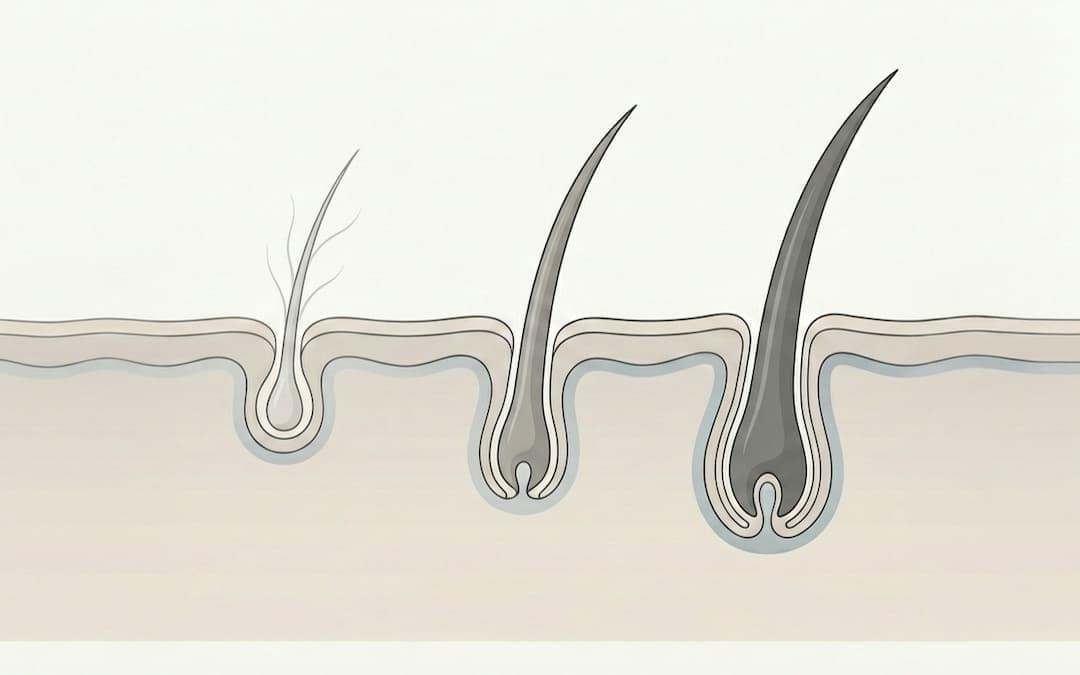
Hair doesn't grow linearly. Dermatology research has clearly established that hair growth follows a predictable biological cycle rather than a constant growth pattern. There are four distinct phases of hair growth: anagen, catagen, telogen, and exogen.
| Hair growth phase | What's happening | Why it matters |
|---|---|---|
| Anagen (growth phase) | Hair is actively growing from the follicle. This phase can last several years for scalp hair. | Many hair growth products aim to support or prolong anagen, because longer growth phases are associated with thicker, denser hair. |
| Catagen (transition phase) | Hair growth stops and the follicle shrinks, detaching from its blood supply. The hair remains in place. | This is a short, natural transition phase. Hair typically does not shed here, and treatments have limited impact at this stage. |
| Telogen (resting phase) | The follicle is inactive, and the hair is no longer growing but remains anchored in the scalp. | A higher number of hairs entering telogen at once can contribute to noticeable thinning over time, especially if new growth is delayed. |
| Exogen (shedding phase) | The old hair is released from the follicle and sheds, often as new hair begins to grow beneath it. | Visible shedding occurs during exogen. Some daily shedding is normal, but excessive or prolonged shedding may signal an underlying issue affecting the growth cycle. |
Hair loss can occur when the normal hair growth cycle is disrupted, causing follicles to spend less time in the growth phase or gradually shrink over time. One common factor in pattern-related hair loss is sensitivity to DHT (dihydrotestosterone), a hormone derived from testosterone that plays a role in several normal body functions.
Learn more: What is DHT?
In people who are genetically predisposed, DHT binds to receptors in certain scalp hair follicles and causes them to gradually miniaturize. As follicles shrink, they produce thinner, shorter hairs and spend less time in the growth phase, which can lead to thinning at the hairline, crown, or across the scalp.
Over time, affected follicles may stop producing visible hair altogether.
Best hair growth products for men: These really work
When it comes to treating hair loss, the hair growth products with the strongest evidence are medical treatments. These options are effective because they target underlying biological processes that contribute to follicle miniaturization and shortened growth cycles, rather than only improving the appearance of existing hair.
The treatments below are the most consistently supported by clinical research.
1. Finasteride
Finasteride is one of the most widely studied and commonly prescribed treatments for male pattern hair loss. It works by lowering DHT levels, which helps slow or stop the follicle miniaturization process responsible for a receding hairline.
Want to try finasteride? Buy finasteride in Canada
Rather than directly stimulating new growth, finasteride's primary benefit is preserving existing hair follicles by keeping them healthier for longer. Many men also see some degree of thickening or regrowth over time, particularly if treatment begins early while follicles are still active.
Heads up: results are gradual. Most people need three to six months to notice early changes and six to twelve months for more visible improvement. Continued use is typically required to maintain results.
Learn more: Everything you need to know about finasteride
2. Dutasteride
Dutasteride works in a similar way to finasteride but suppresses DHT more strongly by blocking additional pathways involved in DHT production. In Canada, it's often discussed as an off-label option for hair loss under a clinician's guidance.
Interested in dutasteride? Buy dutasteride in Canada
Because of its stronger DHT suppression, dutasteride may be considered for men with more aggressive hair loss or for those who haven't responded as well to finasteride alone. Some studies suggest it can lead to greater improvements in hair density, though it's not typically a first-line option for everyone.
As with other prescription treatments, results take time, and ongoing use is usually necessary to sustain benefits.
Learn more: What is dutasteride? A complete guide to hair loss medication
3. Minoxidil
Minoxidil is a topical treatment that works differently from DHT-blocking medications. Instead of targeting hormones, it helps support the hair growth cycle, encouraging follicles to spend more time in the anagen (growth) phase.
Try it out: Buy minoxidil in Canada
Minoxidil is often used alongside finasteride or dutasteride because it addresses a different part of the hair loss process. While it doesn't stop DHT-driven miniaturization on its own, it can improve visible thickness and density when follicles are still capable of producing hair.
Some people notice increased shedding when starting minoxidil. This is usually temporary and reflects hair's cycling through the growth process rather than permanent hair loss.
Learn more: What is minoxidil? Your complete guide to minoxidil in Canada
Good hair growth products: These slow hair loss
Some hair growth products may provide supportive benefits or modest improvements for certain people, but they don't have the same level of evidence as prescription treatments. These options are best thought of as supplementary, not replacements, particularly for pattern-related hair loss that involves follicle miniaturization, thinning hair, or density loss at the crown or across the scalp.
4. Ketoconazole shampoo
Ketoconazole is an antifungal ingredient commonly used to treat dandruff and inflammatory scalp conditions. In the context of hair loss, its benefit appears to be indirect. Ketoconazole helps support a healthier environment for existing hair follicles by reducing scalp inflammation and yeast overgrowth.
Some clinical reviews describe topical ketoconazole as a promising adjunctive therapy for androgenetic alopecia—in other words, it helps regrow hair, but won't reverse hair loss by itself. However, the reviews emphasize that evidence is limited and it should not be considered a primary regrowth treatment. More recent reviews similarly frame ketoconazole shampoo as a complementary option alongside treatments like minoxidil or finasteride, rather than a standalone solution.
5. Red light therapy
Low-level laser therapy (LLLT) uses specific wavelengths of red light to stimulate cellular activity in the scalp. Several randomized controlled trials and systematic reviews suggest LLLT can produce modest increases in hair density compared with sham devices in people with pattern hair loss.
That said, results are variable, and improvements are often subtle. Importantly, LLLT does not address DHT-driven follicle miniaturization. For this reason, it's best positioned as something that may add incremental benefit when used alongside proven medical treatments, rather than a primary solution.
6. Rosemary oil
Rosemary oil is often promoted as a natural alternative to minoxidil, based largely on a small randomized trial that compared rosemary oil to 2% minoxidil over six months and found similar improvements in hair count. Since that initial study, a small number of additional studies and reviews have suggested that rosemary oil may support hair growth through mechanisms such as improved scalp circulation and reduced inflammation.
However, the overall body of evidence remains limited in size and scope. While rosemary oil may offer modest supportive benefits for some people—particularly as part of a broader hair care or scalp health routine—it has not been shown to consistently slow follicle miniaturization or address hormone-driven hair loss in the way prescription treatments do.
It should be viewed as a complementary option, not a replacement for therapies with stronger and more extensive clinical evidence.
7. Peptide-based topicals
Peptide-based hair serums are an emerging category, often marketed as growth-stimulating products. Most available evidence comes from laboratory research, small trials, or studies of cosmetic complexes, rather than large, long-term clinical trials in androgenetic alopecia.
Recent reviews of topical alternatives for hair loss describe peptide-containing formulations as experimental, with mixed and evolving evidence.
At this stage, these products may improve hair appearance or scalp condition, but they haven't been shown to reliably slow hair loss progression or reverse follicle miniaturization on their own.
Hair growth products not worth your money
Not all products marketed for hair growth are supported by strong clinical evidence. While some may support scalp health or reduce breakage, they have not been shown to reliably promote regrowth or slow progression of common forms of hair loss. Understanding where evidence is weak can help people avoid spending money on products unlikely to deliver meaningful results.
Biotin supplements
Biotin deficiency can cause hair thinning. In individuals without a documented deficiency, studies have not shown that biotin supplementation improves hair growth, density, or shedding.
However, high-dose biotin is frequently included in hair supplements, despite limited demonstrated benefit for those who do not have a deficiency. For most people, biotin adds cost without a meaningful hair-related benefit.
Hair growth shampoos
Many shampoos marketed for hair growth contain botanical extracts such as caffeine, saw palmetto, pumpkin seed, or herbal blends.
While there are some studies suggesting modest reductions in shedding or minor changes in hair density, the evidence is limited, inconsistent, and based on small trials. Importantly, there is no strong randomized evidence that these shampoos alone stimulate meaningful regrowth or prevent follicle miniaturization, especially given their short contact time with the scalp.
At best, they may support scalp health or hair appearance, but their effects are largely supportive or cosmetic rather than biological.
Hair oils
Plant-based oils such as castor oil, coconut oil, and argan oil are commonly promoted for hair growth. However, there is no strong clinical evidence that these oils stimulate new hair growth or reverse hair loss.
Research shows that some oils, particularly coconut oil, can reduce protein loss from hair strands and improve moisture retention, which may make hair appear shinier, smoother, and less prone to breakage. Nonetheless, these effects are cosmetic and structural, acting on the hair shaft rather than the follicle.
None of these oils have been shown to meaningfully influence follicle activity, hormone signaling, or the hair growth cycle. Claims that castor or argan oil promote regrowth are largely anecdotal and not supported by randomized controlled trials. While these oils may support hair care and scalp comfort, they do not address the underlying biological causes of hair thinning or hair loss and should not be expected to promote regrowth.
Peptide and collagen supplements
Oral collagen and peptide supplements are marketed for hair, skin, and nails, although there is virtually no clinical data showing they slow hair loss or promote regrowth in people without deficiency.
Some research suggests nutritional support can indirectly benefit hair by improving overall protein status or nutrient levels, but there is insufficient evidence to conclude that peptides or collagen supplements meaningfully alter hair follicle cycles or density. At best, any perceived hair improvements tend to be indirect or cosmetic rather than demonstrably regrowth-related.
Coffee or caffeine extracts
Caffeine has been shown in lab studies to reach the hair follicle and affect how hair cells behave under controlled conditions. In these studies, caffeine helped support hair growth activity in isolated follicles and was able to reach the follicle when applied to the skin.
However, these findings come from laboratory settings, not real-world use. At best, caffeine may offer small supportive benefits rather than true regrowth.
Saw palmetto supplements
Saw palmetto is sometimes marketed as a "natural DHT blocker," based on its potential to influence androgen activity.
A systematic review of oral and topical saw palmetto for hair loss found that some small studies reported modest improvements in hair count, density, or hair quality, particularly when saw palmetto was used in combination products. However, the review also noted that studies varied widely in formulation, dose, and outcome measures, and most were small or short-term.
Overall, the evidence suggests that saw palmetto may provide mild benefits for some people, but results are inconsistent and far less reliable than those seen with established treatments like minoxidil or finasteride. Because of these limitations, saw palmetto should be viewed as a supportive or optional approach, not a primary treatment for hair loss.
Guide: How to stop hair loss
Managing hair loss is usually about using the right combination of hair growth products. For many people, the best results come from treatments that first slow ongoing hair loss and then support regrowth in areas where hair follicles are still active.
1. Start with evidence-based medications
Medications form the foundation of hair loss treatment because they address underlying biological drivers of common types of hair loss. For people with male pattern-related hair loss, DHT-targeting medications such as finasteride or dutasteride can help slow follicle miniaturization. Topical treatments like minoxidil support the hair growth cycle and can improve visible hair density across the scalp, including areas of thinning or crown loss.
When started early and used consistently, these treatments can help stabilize hair loss and, in some cases, lead to partial regrowth. Results take time, often several months, and ongoing use is usually needed to maintain improvements.
Learn more: Finasteride and minoxidil pill: Canada's 2-in-1 tablet for hair loss
2. Supportive options come second
Other hair growth products and therapies may provide incremental or supportive benefits and do not replace proven medications. These options may help improve scalp health, reduce breakage, or enhance the appearance of hair, but they generally do not address the primary biological causes of hair loss on their own.
For this reason, they are best viewed as add-ons, not standalone solutions.
3. Combine products strategically for best results
Shampoos, serums, and supplements can complement a hair loss treatment plan. Again, the most reliable outcomes come from building around evidence-based treatments first. Supportive products may help optimize results, but should not take the place of therapies with strong clinical evidence.
The key takeaway is that addressing hair loss isn't about a single product or quick fix. It's about choosing the right combination for your type of hair loss, starting early when possible, and staying consistent over time.
Hair growth products FAQs
Hair growth products work differently depending on the ingredients, the cause of hair loss, and how long follicles have been affected. These frequently asked questions focus on what hair growth products can (and can't) do, and what to expect when using them.
Do hair growth serums actually work?
Yes, some hair growth serums work, but only a few have strong clinical evidence.
Topical minoxidil is the most well-studied serum-style treatment and has been shown to support regrowth and improve hair density in men with active follicles. Many cosmetic serums, including botanical or peptide blends, may improve the look or feel of hair but haven't been shown to reliably stop hair loss on their own.
How long does it take to see results from hair growth products?
Most hair growth products take three to six months of consistent use before early results are noticeable. More visible changes often take six to twelve months, depending on the product and the individual.
Hair grows slowly, so products that promise results in weeks usually affect hair appearance rather than true growth.
Do hair growth products work for everyone?
No, hair growth products do not work for everyone. Effectiveness depends on the cause of hair loss, how long it has been happening, and whether hair follicles are still active. Products tend to work best when started early, before follicles have fully miniaturized or become inactive.
Is hair shedding normal when starting a hair growth product?
Yes, temporary hair shedding can be normal when starting certain hair growth products, especially topical minoxidil. This happens when weaker hairs shed as follicles shift into a new growth cycle. The shedding is usually short-term and does not mean the product is making hair loss worse.
What's the difference between stopping hair loss and regrowing hair?
Stopping hair loss means slowing or preventing further follicle miniaturization, while regrowing hair means increasing visible density or thickness. Many hair growth products are more effective at stabilizing hair loss than producing regrowth. When regrowth occurs, it usually depends on whether follicles are still capable of producing hair.
Do hair growth products work?
The right hair growth products depend on your hair loss pattern, how far it has progressed, and whether your goal is to slow loss, support regrowth, or both. Starting earlier generally gives you more options, because treatments work best while follicles are still active.
Evidence-based products offer the most reliable results, especially those that address the underlying causes of hair loss rather than just improving hair appearance. Choosing proven treatments first helps avoid wasting time and money on products with limited or inconsistent evidence.
Because some of the most effective hair growth products require a prescription in Canada, clinician guidance can help ensure you're using the right combination for your situation.
Start your online visit today.
References
Chen, D., Yu, F., Wang, C., Chen, H., Tan, J., Shi, Q., He, X., Liu, X., Wang, F., & Zhao, H. (2024). Anti-hair loss effect of a shampoo containing caffeine and adenosine. Journal of Cosmetic Dermatology, 23(9), 2927–2933.
Evron, E., Juhasz, M., Babadjouni, A., & Atanaskova Mesinkovska, N. (2020). Natural hair supplement: Friend or foe? Saw palmetto, a systematic review in alopecia. Skin Appendage Disorders, 6(6), 329–337.
Harvard Health Publishing. (2023, April 12). Considering collagen drinks and supplements?
Panahi, Y., Taghizadeh, M., Tahmasbpour Marzony, E., & Sahebkar, A. (2015). Rosemary oil vs minoxidil 2% for the treatment of androgenetic alopecia: A randomized comparative trial. Skinmed, 13(1), 15–21.
Patel, D. P., Swink, S. M., & Castelo-Soccio, L. (2017). A review of the use of biotin for hair loss. Skin Appendage Disorders, 3(3), 166–169.
Rele, A. S., & Mohile, R. B. (2003). Effect of mineral oil, sunflower oil, and coconut oil on prevention of hair damage. Journal of Cosmetic Science, 54(2), 175–192.
Stenn, K. S., & Paus, R. (2001). Controls of hair follicle cycling. Physiological Reviews, 81(1), 449–494.
Thompson, K. G., & Kim, N. (2012). Role of caffeine in the management of androgenetic alopecia. International Journal of Dermatology, 51(11), 1281–1283.
This article is for informational purposes only and does not constitute medical advice. The information contained herein is not a substitute for and should never be relied upon for professional medical advice. Always talk to your doctor about the risks and benefits of any treatment.