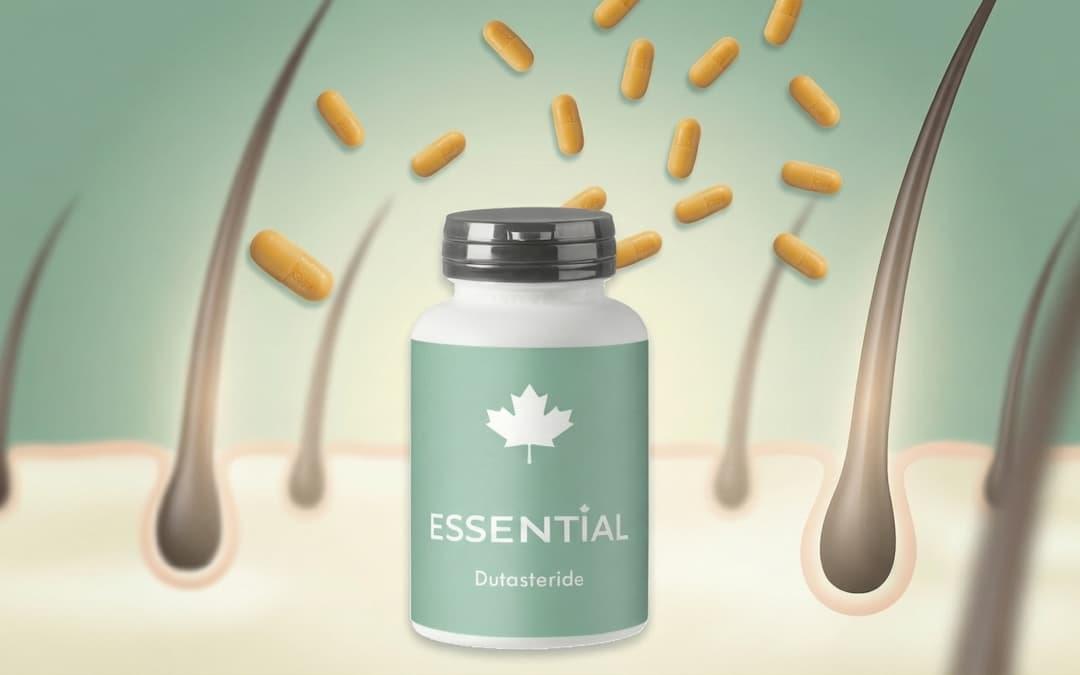
What Is Dutasteride?
What Is Dutasteride? A Complete Guide to the Hair Loss Medication
If you're serious about reversing hair loss, you're probably already familiar with other hair loss medications, like finasteride.
However, there's a stronger option.
Dutasteride is one of the most effective, scientifically supported medications for male pattern hair loss, showing deeper DHT suppression and more meaningful regrowth than finasteride alone.
While it's less common in Canada, dutasteride has been widely used in countries such as Japan and South Korea, where it's often prescribed as a frontline treatment for androgenetic alopecia. Its growing international reputation comes down to one thing: it targets the hormone that causes hair loss more completely.
If you're weighing your options or wondering whether dutasteride might work where finasteride hasn't, this guide breaks it all down: What it is, how it works, how it compares, what kind of results you can realistically expect, and how to access it safely in Canada.
Want to learn more about hair loss treatments? Buy Dutasteride Online
Brief overview: How hair loss happens
Male pattern hair loss, or androgenetic alopecia, is driven by a combination of genetics, hormones, and age.
Learn more: Hair Loss in Men: Your Ultimate Guide to Its Causes, Prevention, and Treatment
The hormone dihydrotestosterone (DHT) plays a major role. The body makes DHT using two main forms of the enzyme 5-alpha-reductase. Each type plays a different role in hair loss:
| Enzyme Type | Where It's Found | What It Does |
|---|---|---|
| Type I 5-alpha-reductase | Scalp skin and sebaceous (oil) glands | Produces DHT on the surface of the scalp |
| Type II 5-alpha-reductase | Inside the hair follicles | Directly involved in follicle shrinking and male pattern hair loss |
For those who are genetically sensitive to DHT, the hormone gradually weakens the follicles over time. The hair that grows back becomes thinner and shorter with each cycle, decreasing in density, and the follicles themselves shrink.
Learn more: What is DHT and How Does it Affect Hair Loss?
The good news is that these follicles don't die right away. If you lower DHT levels, you can slow down the thinning and often help the follicles grow thicker, stronger hair again. Medications like finasteride and dutasteride reduce DHT, so your hair has a better chance of recovering.
What is dutasteride?
Dutasteride (Avodart) is a prescription medication that lowers the amount of DHT (dihydrotestosterone) your body produces.
Although dutasteride was originally approved as a treatment for benign prostatic hyperplasia (BPH), it has since become one of the most effective medications used off-label in Canada for androgenetic alopecia.
Dutasteride works by lowering DHT levels, which helps slow or stop ongoing thinning. It also protects the follicles most vulnerable to male pattern baldness. With consistent use, many men experience visible improvements in hair thickness, density, and overall coverage.
How to take dutasteride for hair loss?
Dutasteride may be taken orally or topically.
- Oral dutasteride: Typically 0.5 mg capsules, taken once a day.
- Topical dutasteride: Solutions from 0.1% to 0.3% applied daily.
How does dutasteride work?
Dutasteride works by blocking the conversion of testosterone into DHT. By significantly lowering DHT levels in the scalp and bloodstream, dutasteride helps protect hair follicles from shrinking over time, which can slow thinning, reduce shedding, and support regrowth when used consistently.
In contrast, finasteride, a hair loss medication in the same family, also lowers DHT but does so more selectively. Finasteride blocks only one of the enzymes involved in DHT production, while dutasteride blocks two.
This broader action is why dutasteride typically results in deeper DHT suppression and, for some men, stronger or more consistent hair growth. In comparative clinical trials, dutasteride 0.5 mg produced significantly stronger regrowth than finasteride 1 mg, making it a preferred option for men who want a more powerful treatment or who haven't seen enough progress with finasteride alone.
Learn more: Finasteride vs Dutasteride for Hair Loss
Onset and duration: When to expect results
Like all hair-loss medications, dutasteride works gradually.
Most men begin to notice reduced shedding within three to six months, which is often the first sign the medication is working. More visible improvements—such as thicker hair and improved density—typically appear around 12 months, once hair follicles complete multiple growth cycles.
Dutasteride has a long half-life (approximately five weeks), meaning it stays active in the body for an extended period. This allows for steady DHT suppression with consistent dosing, but it also means that results depend on staying on treatment.
If dutasteride is discontinued, DHT levels will gradually rise again, and hair-loss progression may resume.
How effective is dutasteride for hair loss?
Dutasteride is one of the most effective oral medications available for male pattern hair loss. Clinical evidence shows that it suppresses DHT more completely than finasteride because it blocks both type I and type II 5-alpha-reductase enzymes, rather than just one.
Results from taking dutasteride include:
- Increase hair counts
- thicker hair shafts
- improved density, especially at the crown and mid-scalp
Better for guys with less hair: Since DHT suppression is deeper and more sustained, dutasteride is often effective in moderate to advanced androgenetic alopecia, where finasteride alone may no longer be sufficient. This is one reason dutasteride has become a frontline hair-loss treatment in many countries around the world, such as Japan and South Korea.
Better with additional strategies: Like most hair-loss treatments, dutasteride often works best as part of a broader plan. Many men see the best results when combining it with treatments like minoxidil, microneedling, or low-level laser therapy.
Side effects and safety
Dutasteride is generally safe and well-tolerated when prescribed appropriately and monitored by a clinician. Most people who take dutasteride do not experience side effects, and when side effects do occur, they are typically mild, uncommon, and reversible.
The side effects or adverse events of dutasteride depend to some extent on how you take it.
Oral dutasteride 0.5 mg daily tablets have the following potential side effects (in brackets, we've estimated the percent of dutasteride patients experiencing the side effect, compared to finasteride 5 mg):
- Decreased libido (5% versus 6% for finasteride)
- Impotence or sexual dysfunction (7% versus 8% for finasteride)
- Ejaculatory disorder (1% versus 1% for finasteride)
- Gynaecomastia (1% versus 1% for finasteride)
Additionally, rare dutasteride side effects include:
- Dizziness
- Cardiac failure
Some users also report breast tenderness or mild swelling. These effects are uncommon and often improve with time, dose adjustment, or discontinuation.
A smaller number of users report mood changes or testicular discomfort. Allergic reactions are rare. Importantly, dutasteride remains well-tolerated even at the higher doses used to treat benign prostatic hyperplasia, supporting its overall safety profile.
Learn more: Dutasteride Side Effects: What to Know.
Who should avoid dutasteride?
Dutasteride is safe and well-tolerated for most men when prescribed appropriately, but there are certain groups who should not use it or who require extra caution, including people:
- Who are pregnant or may become pregnant
- With certain liver conditions
- Taking medications that strongly affect liver enzymes
- Advised to avoid DHT-blocking medications
Alternatives to dutasteride
While dutasteride offers the deepest DHT suppression among oral hair loss medications, it isn't the right choice for everyone. Depending on your hair loss pattern, goals, and tolerance for medication, there are several well-established alternatives that may be used on their own or in combination.
- Finasteride. Finasteride is another prescription DHT-blocking medication and is often the first-line treatment for male pattern hair loss. It works by reducing DHT levels more selectively than dutasteride and is widely used in Canada.
- Minoxidil. Minoxidil is a non-hormonal treatment that helps stimulate hair growth by improving blood flow to the scalp and extending the hair growth phase. It's commonly used alongside DHT blockers to support regrowth and increase overall density.
- Ketoconazole. Ketoconazole is an antifungal medication often used in medicated shampoos. In addition to supporting scalp health, it may help reduce inflammation and local DHT activity, making it a useful complementary treatment for androgenetic alopecia.
Dutasteride prescriptions and pricing
In Canada, dutasteride is a prescription-only medication and is not available over the counter.
Prescriptions: A licensed clinician must assess your hair loss pattern, medical history, and overall suitability before prescribing it. This helps ensure that dutasteride is both safe and appropriate for your individual needs.
Pricing: In Canada, generic dutasteride is typically cheaper than generic finasteride. This is because dutasteride has been available as a generic for longer and isn't marketed as heavily for hair loss, while finasteride is more widely promoted and prescribed for this use. Brand-name dutasteride (Avodart) costs more, but the generic version is much more affordable.
Insurance: Since dutasteride is usually prescribed for cosmetic hair loss rather than a medical condition, most insurance plans do not cover it, and patients should expect to pay out of pocket.
Get dutasteride in Canada
If you're considering dutasteride, the first step is a medical evaluation. A licensed clinician can review your hair loss history, discuss potential benefits and risks, and determine whether dutasteride is the right option for you.
Essential Clinic provides a convenient way to access dutasteride online, with clinician-led care, ongoing monitoring, and discreet delivery anywhere in Canada.
Start your online visit to see whether dutasteride is right for you.
References
Al-Horani, R. A., & Patel, P. (2024). Dutasteride. In StatPearls. StatPearls Publishing.
Almudimeegh, A., AlMutairi, H., AlTassan, F., AlQuraishi, Y., & Nagshabandi, K. N. (2024). Comparison between dutasteride and finasteride in hair regrowth and reversal of miniaturization in male and female androgenetic alopecia: A systematic review.
Giordano S, Romeo M, di Summa P, Salval A, & Lankinen P. (2018). A Meta-analysis On Evidence Of Platelet-rich Plasma for Androgenetic Alopecia. International Journal of Trichology. 10(1), 1-10.
Marks, L. S. (2004). 5α-reductase: History and clinical importance. Reviews in Urology, 6(Suppl 9), S11–S21.
Miller, J., & Tarter, T. H. (2007). Update on the use of dutasteride in the management of benign prostatic hypertrophy. Clinical Interventions in Aging, 2(1), 99–104.
Traish, A. M., Hassani, J., Guay, A. T., Zitzmann, M., & Hansen, M. L. (2015). Adverse effects and safety of 5-alpha reductase inhibitors (finasteride, dutasteride): A systematic review. Journal of Clinical and Aesthetic Dermatology, 8(7), 20–30.
This article is for informational purposes only and does not constitute medical advice. The information contained herein is not a substitute for and should never be relied upon for professional medical advice. Always talk to your doctor about the risks and benefits of any treatment.