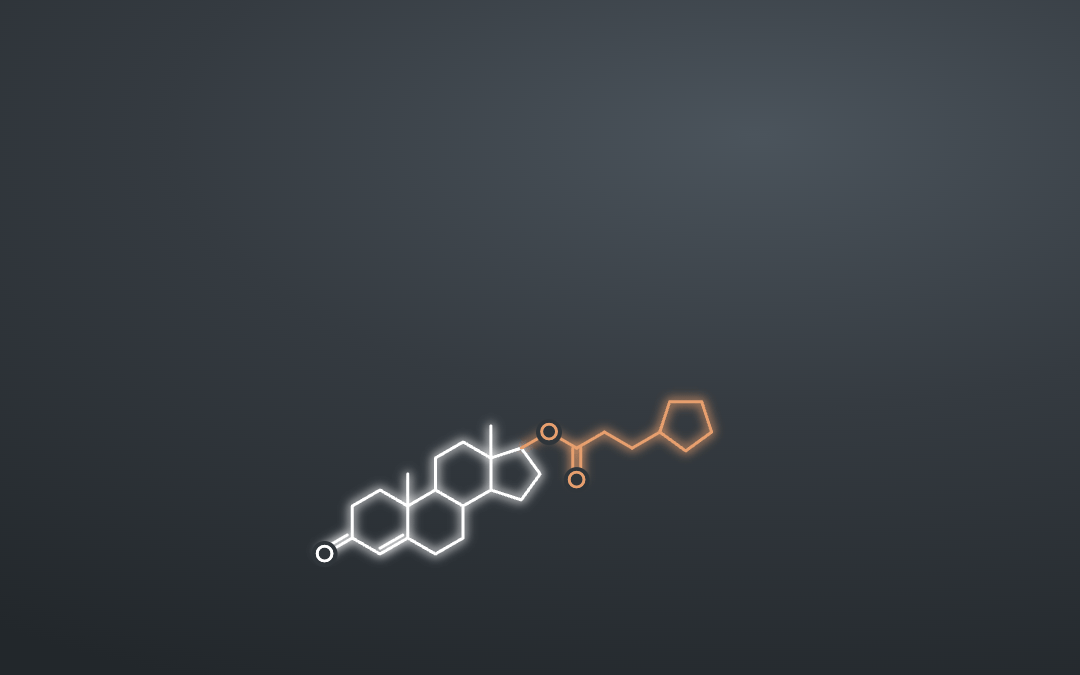
Testosterone Cypionate
Testosterone Cypionate: How It Works, Dosing and Side Effects
Testosterone cypionate is one of the most common forms of testosterone replacement therapy (TRT). It's an injection, usually taken once or twice a week, for men whose blood tests confirm low testosterone.
This guide covers what it is, how it's injected, how long it takes to work, the side effects to know about and how it compares with other options.
Think you have low T? Get checked online by a licensed clinician.
What is testosterone cypionate?
Testosterone cypionate is a long-acting, injectable form of testosterone. Each dose releases testosterone slowly over about 8 days, and your body uses it the same way it uses its own.
It is prescribed for testosterone deficiency (hypogonadism) when blood tests show low levels and a clinician confirms treatment is right for you. It isn't prescribed for symptoms alone, and it isn't the same as supplements sold as "testosterone boosters".
Testosterone is a controlled substance in Canada, so it is only legally sold with a prescription.
Learn more: What is Low T? Your Complete Guide to Low Testosterone
How is testosterone cypionate injected?
Usually once or twice a week, with a small needle just under the skin. Most men give their own injections (shots) at home, and your clinician or pharmacist can show you how before your first dose.
Where do you inject testosterone cypionate?
Most men inject just under the skin of the belly, at least 5 cm (2 inches) from the belly button. The needle is small and thin, and most men find it nearly painless. Switch sides each time to help prevent soreness and lumps.
Some men inject into a muscle instead, such as the thigh or buttock, which uses a longer needle. A 2022 review found that injections under the skin are a safe and practical alternative.
Tips for injecting at home
- Wash your hands, and wipe the spot with an alcohol swab. Let it dry before you inject.
- Use a new needle every time.
- Put used needles straight into a sharps container. Many pharmacies take full containers back.
- Contact your clinician if a spot stays red, warm, swollen or painful.
Once a week or twice a week?
Both work. One weekly injection is the simplest routine. Splitting the same weekly amount into two smaller injections keeps testosterone levels steadier, with lower peaks and shallower dips between doses.

Illustration only. Dots mark injection days. Your clinician sets your dose and schedule from your blood tests.
How long does testosterone cypionate take to work?
Changes come gradually. Canadian guidelines say to expect most improvements after about 3 months.
- First few weeks: energy, mood and sex drive can start to lift.
- Around 3 months: most men notice the main improvements, including better erections.
- 6 months and beyond: strength goes up and body fat comes down.
Everyone responds differently, and not every symptom improves for every man. Follow-up blood tests show whether your levels are where they should be.
What are the side effects of testosterone cypionate injections?
Most are mild. Follow-up blood tests, usually every 3 to 6 months, check your testosterone level, red blood cell count and other safety markers, so your dose can be adjusted early.
More common side effects:
- A higher red blood cell count, which is more likely with injections than with gel
- Acne or oily skin
- Water retention
- Mood changes
Less common side effects:
- Breast tenderness or swelling
- Smaller testicles
- Worse sleep apnea
Does testosterone cypionate affect fertility?
Yes. Like other forms of TRT, it lowers your body's own sperm production. If you want children, tell your clinician before you start: HCG can be added to help preserve fertility, and enclomiphene keeps natural sperm production going.
Who should not take testosterone cypionate?
Testosterone therapy isn't right for everyone. Your clinician reviews your health history and blood tests before prescribing it. Canadian and US guidelines advise against starting it if:
- You plan to have children soon
- You have or have had prostate or breast cancer
- You have a prostate lump or a high PSA that hasn't been checked
- You have a high red blood cell count
- You have untreated severe sleep apnea
- You have unstable heart disease, or had a heart attack or stroke in the last 6 months
How does testosterone cypionate compare with other options?
Cypionate and enanthate are nearly identical injections. Gel avoids needles but is applied every day, and enclomiphene is a daily pill for men who want to keep their natural sperm production.
| Option | Form | How often | Your own sperm production |
|---|---|---|---|
| Testosterone cypionate | Injection | Once or twice a week | Lowers it |
| Testosterone enanthate | Injection | Once or twice a week | Lowers it |
| Testosterone gel | Gel on the skin | Every day | Lowers it |
| Enclomiphene | Pill | Every day | Keeps it going |
Testosterone cypionate vs enanthate
Very little separates them. Both are long-acting injectable forms of testosterone, and your body uses each one the same way. Cypionate is bonded to a slightly longer ester, so it releases a little more slowly. Most men do equally well on either.
In Canada, cypionate is the more common choice. The brand-name version of enanthate was discontinued in 2024, and supply of enanthate has been unreliable since. Men switching from enanthate to cypionate usually notice little difference.
Learn more: Testosterone Replacement Therapy: What It Is, How It's Used, and What to Expect
How do you get testosterone cypionate in Canada?
With a prescription from a licensed clinician, after blood tests confirm low testosterone. The usual steps are:
- A health assessment: a clinician asks about your symptoms and history.
- Blood tests: a morning blood test confirms low testosterone. Your clinician may ask for a second test.
- A clinician review: your results and options are explained to you.
- Follow-up blood tests: usually every 3 to 6 months, to keep your dose on track.
Learn more: How to Get TRT in Canada, From Blood Test to Prescription
Think you might have low T? Start your online TRT visit.
Questions about testosterone cypionate
Does a testosterone cypionate injection hurt?
Most men find injections under the skin nearly painless, because the needle is small and thin.
Can you buy testosterone cypionate without a prescription in Canada?
No. Testosterone is a controlled substance in Canada and is only legally sold with a prescription.
How often do you need blood tests on testosterone cypionate?
Usually every 3 to 6 months after you start, and less often once your levels are stable. Your clinician will tell you when to have blood drawn, usually a few days after an injection, so your results can be compared over time.
Is testosterone cypionate the same as a testosterone booster?
No. Supplements sold as testosterone boosters don't contain testosterone and aren't a treatment for low testosterone.
References
Basaria, S. (2014). Male hypogonadism. The Lancet, 383(9924), 1250–1263.
Bhasin, S., Brito, J. P., Cunningham, G. R., Hayes, F. J., Hodis, H. N., Matsumoto, A. M., Snyder, P. J., Swerdloff, R. S., Wu, F. C., & Yialamas, M. A. (2018). Testosterone therapy in men with hypogonadism: An Endocrine Society clinical practice guideline. The Journal of Clinical Endocrinology & Metabolism, 103(5), 1715–1744.
Grober, E. D., Krakowsky, Y., Khera, M., Holmes, D. T., Lee, J. C., Grantmyre, J. E., Patel, P., Bebb, R. A., Fitzpatrick, R., Campbell, J. D., Carrier, S., & Morgentaler, A. (2021). Canadian Urological Association guideline on testosterone deficiency in men: Evidence-based Q&A. Canadian Urological Association Journal, 15(5), E234–E243.
This article is for informational purposes only and does not constitute medical advice. The information contained herein is not a substitute for and should never be relied upon for professional medical advice. Always talk to your doctor about the risks and benefits of any treatment.