How to Get TRT in Canada
How to Get TRT in Canada, From Blood Test to Prescription
To get testosterone replacement therapy (TRT) in Canada, you need blood tests that confirm low testosterone and a prescription from a licensed doctor or nurse practitioner. You can get both through your family doctor, a specialist or an online clinic.
This guide covers who qualifies, each step, where to go, how long it takes and what you'll pay for.
Think you have low T? Get checked online by a licensed clinician.
Do you need a prescription for TRT in Canada?
Yes. Testosterone is a controlled substance in Canada. It's only legal with a prescription, filled by a licensed pharmacy.
Websites that sell testosterone without a prescription are selling it illegally. Health Canada warns that drugs from these sites can be fake, expired or contaminated, or have the wrong ingredients.
Supplements sold as "testosterone boosters" don't need a prescription. They don't contain testosterone, and they aren't a treatment for low testosterone.
Who qualifies for TRT?
You need two things: symptoms of low testosterone, and blood tests that show your levels are low. Canadian guidelines don't recommend TRT for men with low levels but no symptoms.
Common symptoms include:
- A lower sex drive
- Erection problems, or fewer morning erections
- Low energy and feeling tired all the time
- Low mood or irritability
- Losing muscle or gaining body fat
Low testosterone is common. The Canadian Urological Association estimates that about 1 in 4 Canadian men aged 40 to 62 have low testosterone levels. It gets more common with age, but younger men can have it too.
Many other things cause the same symptoms, so your clinician looks for them too. These include depression, thyroid problems, sleep apnea, extra weight, alcohol and some medications, like opioids. Poor sleep alone can lower testosterone by about 10–15%. Treating these first sometimes brings testosterone back up on its own.
Learn more: What is Low T? Your Complete Guide to Low Testosterone
How to get TRT in Canada, step by step
- Notice the symptoms. They have many possible causes, so testing comes next.
- Get a blood test. It measures your total testosterone. Have it drawn between 7 and 11 a.m., when levels are highest. Your clinician will usually also check free testosterone, other hormones, your red blood cell count and, for some men, PSA (a prostate test). These help plan treatment safely.
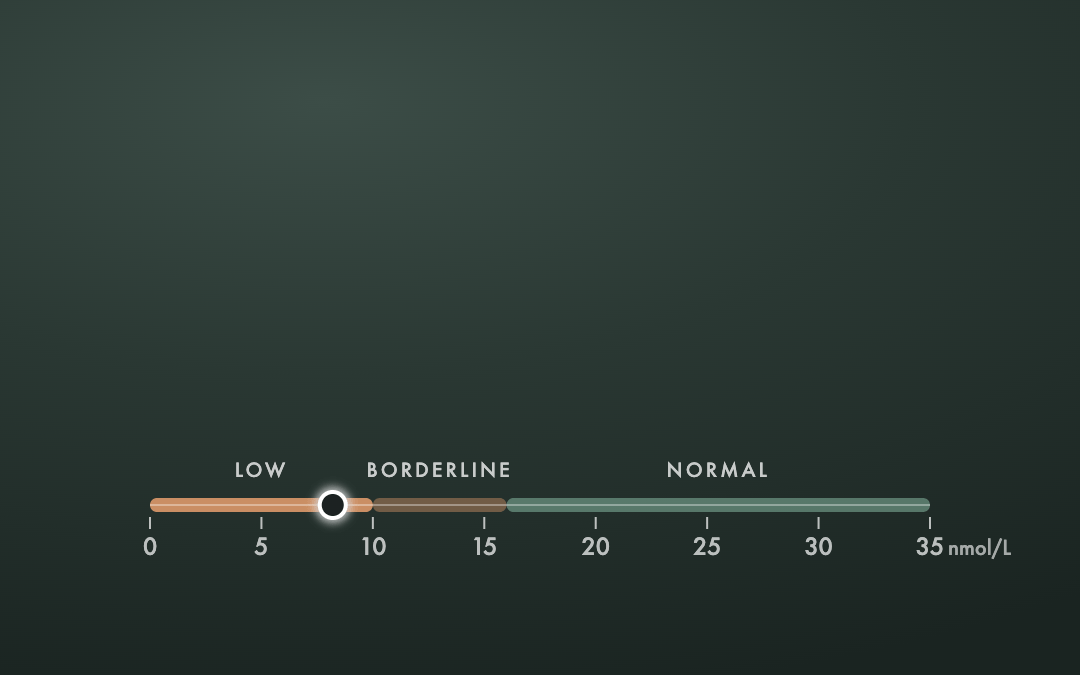
- Confirm the result. Testosterone changes from day to day, so your clinician may ask for a second morning test. Canadian guidelines use a total testosterone under 10 nmol/L as a guide for low testosterone.
- Review your results with a clinician. They look at your symptoms, health history and blood tests together. Then you decide together whether TRT is right for you.
- Choose a treatment. You and your clinician pick the form that fits your life. Injections of testosterone cypionate or enanthate are given once or twice a week. A gel is applied every day. A daily pill, such as enclomiphene, helps your body make more of its own testosterone.
- Keep up with follow-up tests. Blood tests every 3 to 6 months check that your levels are in range and that treatment stays safe. If your symptoms haven't improved after about 3 months, your clinician may raise your dose or switch you to another form. If they still don't improve once your levels are well within the normal range, your clinician will look for other causes and may stop treatment.
Reading US websites? They report testosterone in ng/dL. Divide by 28.8 to get nmol/L. The American Urological Association uses under 300 ng/dL, which is about 10.4 nmol/L, close to the Canadian guide.
What if your result is borderline?
Testosterone results don't split neatly into low and normal. The Canadian guideline calls 10 nmol/L a reasonable line, but notes that some men have symptoms at higher levels. Results a little above it, up to about 16 nmol/L, are a grey zone.
In that range, your clinician looks at more than one number:
- Free testosterone and SHBG. SHBG is a protein that holds on to testosterone. When it's high, your total can look normal while the testosterone your body can use is low.
- LH and FSH. These hormones show whether the problem starts in your brain or your testes.
- Things you can fix. Extra weight, poor sleep, sleep apnea and alcohol can all lower testosterone.
- Your plans for children. This changes which treatment fits.
If treatment makes sense, guidelines suggest a 3-month trial with close follow-up to see whether your symptoms improve.
Where can you get TRT in Canada?
You have three routes: your family doctor, a specialist or an online clinic. Each one ends the same way, with blood tests and a decision from a licensed clinician.
| Route | Referral needed? | What to expect |
|---|---|---|
| Family doctor or nurse practitioner | No | Visits are covered by your provincial plan, but millions of Canadians don't have one |
| Specialist (endocrinologist or urologist) | Yes | Best for complex cases, but waits are often months |
| Online clinic | No | Assessment online, blood tests at a nearby lab, medication shipped to you |
Your family doctor
A family doctor or nurse practitioner can order the blood tests and prescribe TRT. Many manage it themselves. Others refer you to a specialist.
The hard part is getting in. The 2025 OurCare survey estimates that 5.9 million adults in Canada don't have a regular family doctor or nurse practitioner.
A specialist
Endocrinologists (hormone specialists) and urologists treat low testosterone. They help most when there may be another cause behind it, such as a pituitary problem.
You need a referral, and the wait is long. The Fraser Institute's 2026 wait-times survey found a median wait of 30.7 weeks from a family doctor's referral to treatment, across all specialties.
Can you get TRT online in Canada?
Yes. Online clinics handle the process remotely. You complete a health assessment and get a requisition for blood tests at a lab near you. Then you review your results with a licensed clinician, and your medication is shipped to your door.
It's often the fastest route if you don't have a family doctor or don't want to wait for a referral.
What to look for in an online TRT clinic
- Blood tests before any prescription. A clinic that prescribes testosterone without lab results isn't following guidelines.
- Clinicians licensed in your province. Check that a licensed doctor or nurse practitioner cares for you.
- Ongoing follow-up. Regular blood tests and dose changes, not a one-time prescription.
- A licensed Canadian pharmacy. Your medication should come from a pharmacy regulated in Canada.
- Clear fees. You should know what you'll pay before you start.
Ready to get checked? Start your online TRT visit and get a lab requisition and a licensed clinician to review your results.
How long does it take to get TRT?
It depends on the route. Through a family doctor, it takes as long as booking appointments and tests, plus any specialist referral. With an online clinic, the assessment takes minutes. Lab results usually come back within a few days.
Once you start, the benefits build gradually. Some men notice more energy and sex drive within a few weeks. Canadian guidelines say to expect most improvements after about 3 months. Changes in muscle and body fat can take 6 months or longer.
Is TRT covered by OHIP or insurance?
Partly. Here's what's usually covered and what you'll pay for.
- Blood tests: provincial health plans cover them in most cases, including when an online clinic orders them. Some tests aren't covered everywhere. In BC, for example, free testosterone and PSA are often paid for by the patient.
- Visits: family doctor and specialist visits are covered. Online clinic fees aren't covered by OHIP or other provincial plans.
- Medication: workplace health plans often cover it, so check yours. Otherwise you pay for it. Provincial drug plans mostly cover seniors and people on social assistance.
Who shouldn't get TRT?
Testosterone therapy isn't right for everyone, which is why a clinician reviews your health history and blood tests first. Canadian and US guidelines advise against starting it if:
- You want to have children soon
- You have or have had prostate or breast cancer
- You have a prostate lump or a high PSA that hasn't been checked
- You have a high red blood cell count
- You have untreated severe sleep apnea
- You have unstable heart disease, or had a heart attack or stroke in the last 6 months
If you want children in the future, tell your clinician before you start. Testosterone injections and gel lower your own sperm production. Other treatments help your body make its own testosterone and keep sperm production going.
Learn more: Testosterone Replacement Therapy: What It Is, How It's Used, and What to Expect
Getting TRT online with Essential Clinic
Essential Clinic offers online TRT in Canada in every province and territory except Quebec and Yukon.
- Online visit: tell us about your symptoms and health history. The $49 annual consult fee covers your assessment, lab requisitions and a year of clinician care.
- Blood test: take your lab requisition to a lab near you. It covers a full panel of hormones and health markers, not just total testosterone, so your clinician sees the whole picture.
- Clinician call: a licensed Canadian clinician goes over your results with you and explains your options.
- Delivery: if treatment is right for you, it ships free and discreetly with everything you need.
- Ongoing care: follow-up blood tests every 3 to 6 months, with your treatment adjusted as needed.
Think you might have low T? Start your online TRT visit.
Questions about getting TRT in Canada
Can I get TRT without a blood test?
No. Guidelines require blood tests that confirm low testosterone before treatment starts. Symptoms alone aren't enough, because many other things cause them.
Do I need a referral to get TRT?
Not to see a family doctor, nurse practitioner or online clinic. You need one to see an endocrinologist or urologist.
Can a nurse practitioner prescribe TRT?
Yes. Nurse practitioners can order the blood tests, prescribe TRT and manage your follow-up care.
Is online TRT legal in Canada?
Yes. Getting TRT through an online clinic is legal in Canada, as long as a licensed Canadian clinician prescribes it after reviewing your blood tests and a licensed pharmacy fills the prescription. What isn't legal is buying testosterone without a prescription, because it's a controlled substance.
Can I buy testosterone online in Canada?
Only with a prescription, filled by a licensed pharmacy. Buying testosterone without a prescription is illegal, and the products may not contain what their labels say. An online visit is the legal way to get a prescription from home.
Is TRT the same as a testosterone booster?
No. Testosterone boosters are supplements that don't contain testosterone. Canadian guidelines found little or no evidence that they work, and some have contained banned steroids. TRT is a prescription treatment for confirmed low testosterone.
References
Bhasin, S., Brito, J. P., Cunningham, G. R., Hayes, F. J., Hodis, H. N., Matsumoto, A. M., Snyder, P. J., Swerdloff, R. S., Wu, F. C., & Yialamas, M. A. (2018). Testosterone therapy in men with hypogonadism: An Endocrine Society clinical practice guideline. The Journal of Clinical Endocrinology & Metabolism, 103(5), 1715–1744.
Controlled Drugs and Substances Act, S.C. 1996, c. 19, Schedule IV. Government of Canada, Justice Laws Website.
Grober, E. D., Krakowsky, Y., Khera, M., Holmes, D. T., Lee, J. C., Grantmyre, J. E., Patel, P., Bebb, R. A., Fitzpatrick, R., Campbell, J. D., Carrier, S., & Morgentaler, A. (2021). Canadian Urological Association guideline on testosterone deficiency in men: Evidence-based Q&A. Canadian Urological Association Journal, 15(5), E234–E243.
Health Canada. (n.d.). Buying drugs online. Government of Canada.
Mulhall, J. P., Trost, L. W., Brannigan, R. E., Kurtz, E. G., Redmon, J. B., Chiles, K. A., Lightner, D. J., Miner, M. M., Murad, M. H., Nelson, C. J., Platz, E. A., Ramanathan, L. V., & Lewis, R. W. (2018). Evaluation and management of testosterone deficiency: AUA guideline. The Journal of Urology, 200(2), 423–432.
This article is for informational purposes only and does not constitute medical advice. The information contained herein is not a substitute for and should never be relied upon for professional medical advice. Always talk to your doctor about the risks and benefits of any treatment.